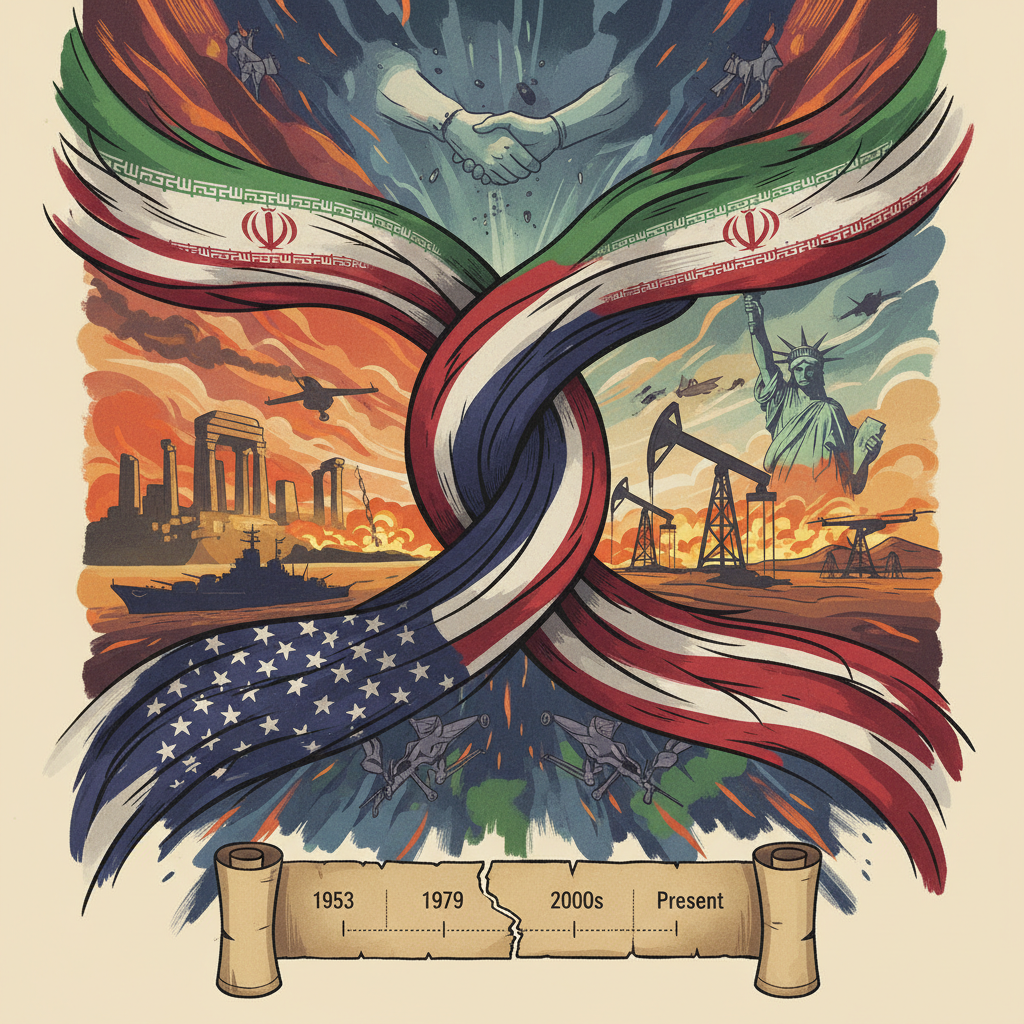
Introduction to US-Iran Relations
The relationship between the United States and Iran has been marked by tension and conflict for several decades. Understanding the dynamics of this relationship requires exploring historical events, political decisions, and military strategies that have shaped the interactions between these two nations.
Historical Context of the US-Iran War
The roots of the conflict between the US and Iran can be traced back to the mid-20th century. The 1953 Iranian coup, orchestrated by the US and the UK, resulted in the overthrow of Prime Minister Mohammad Mossadegh and the strengthening of the Shah’s authoritarian regime. This laid the groundwork for future tensions and hostilities.
The 1979 Iranian Revolution
The Iranian Revolution of 1979 was a turning point in US-Iran relations. The overthrow of the Shah and the establishment of the Islamic Republic under Ayatollah Khomeini led to the deterioration of diplomatic ties. The subsequent hostage crisis further escalated the animosity between the two nations.
US Sanctions and Their Impact
Over the years, the US has imposed a series of economic sanctions on Iran, aimed at curbing its nuclear ambitions and influencing its foreign policy. These sanctions have significantly affected Iran’s economy and have been a central aspect of the US-Iran conflict.
Key Military Events
Military encounters between the US and Iran have been sporadic but impactful. These events have often been a response to broader geopolitical strategies and regional power shifts.
Operation Praying Mantis
In 1988, the US Navy launched Operation Praying Mantis against Iranian forces in retaliation for the mining of a US warship. This operation showcased the military might of the US and highlighted the volatile nature of US-Iran military engagements.
Drone Strikes and Cyber Warfare
In recent years, technological advancements have led to new forms of conflict, including drone strikes and cyber warfare. The assassination of Iranian General Qasem Soleimani via a US drone strike in 2020 marked a significant escalation in military tactics.
Diplomatic Efforts and Peace Initiatives
Despite the ongoing conflict, there have been attempts at diplomacy and peace initiatives aimed at resolving tensions.
The Iran Nuclear Deal
The Joint Comprehensive Plan of Action (JCPOA), commonly known as the Iran Nuclear Deal, was negotiated in 2015 to limit Iran’s nuclear capabilities in exchange for the lifting of economic sanctions. Though the US withdrew from the deal in 2018, it remains a focal point in diplomatic efforts.
Regional and Global Implications
The US-Iran conflict has far-reaching implications, influencing regional stability in the Middle East and impacting global political dynamics. Countries worldwide watch closely as these two powers navigate their complex relationship.
Frequently Asked Questions
- What led to the US-Iran conflict?
The US-Iran conflict originated from historical interventions, notably the 1953 coup, and has evolved through political, economic, and military confrontations.
- How do US sanctions impact Iran?
US sanctions have severely affected Iran’s economy, limiting its trade capabilities and access to international markets, which exacerbates domestic challenges.
- Is there a possibility of peace between the US and Iran?
While tensions remain high, diplomatic efforts like the Iran Nuclear Deal demonstrate the potential for negotiation and peaceful resolution.
- How does the US-Iran war affect global politics?
The conflict influences regional alliances and global diplomatic strategies, affecting international relations and security policies.
- What role does the Middle East play in the US-Iran war?
The Middle East is a strategic region, and its geopolitical significance heightens the stakes of the US-Iran conflict, impacting regional stability.
Conclusion
The US-Iran war is complex, rooted in historical events and characterized by ongoing political and military tensions. Understanding this conflict requires examining the interplay of historical, economic, and geopolitical factors that continue to shape the relationship between these two nations.